If you mention the word ‘Blooms’ to any teacher, chances are they will know exactly what you are talking about. Blooms taxonomy was a tool created to assist the development of learning and assessment opportunities for students that provided the greatest cognitive processing skills (Bloom, Krathwohl & Masia, 1964). Blooms provided a levelling tool against which teachers could determine the complexity of their tasks and adjust accordingly to ensure that they were providing those higher order and complex opportunities to students (Killen, 2005). While Blooms is synonymous guiding teachers with facilitating different knowledge processes, how much thought do we give to the technology that is included in these tasks. Anderson and Krathwohl (2001) propose that different technologies may facilitate certain types of knowledge representation.
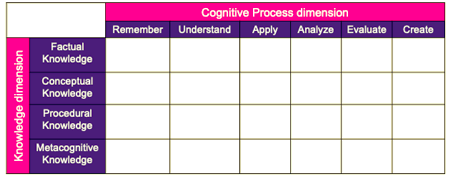
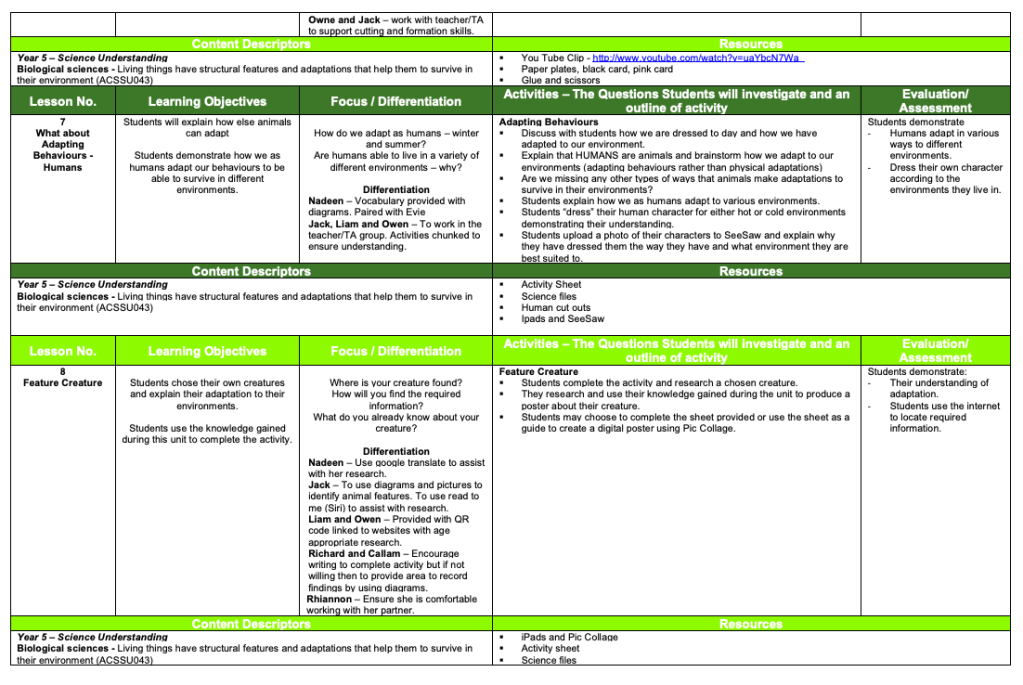
Using this framework provided by Anderson and Krathwohl (2001), I have mapped a unit previous created for Grade 5 Biological Science – Animal Adaptations. This unit included activities and ideas from Primary Connections and was closely aligned to the Australian Curriculum Standards.
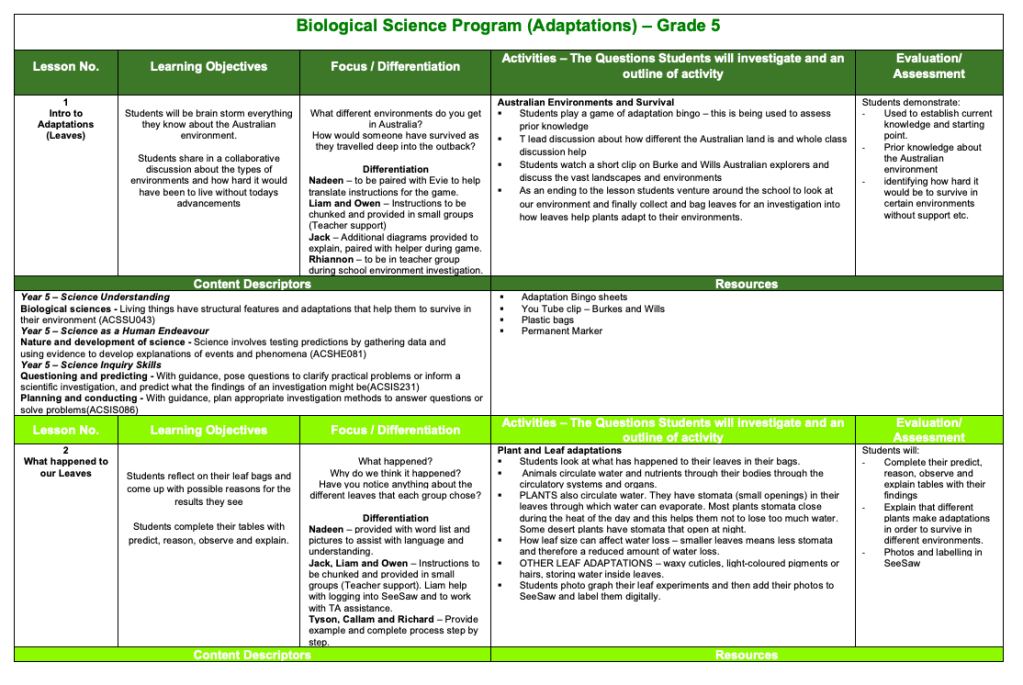
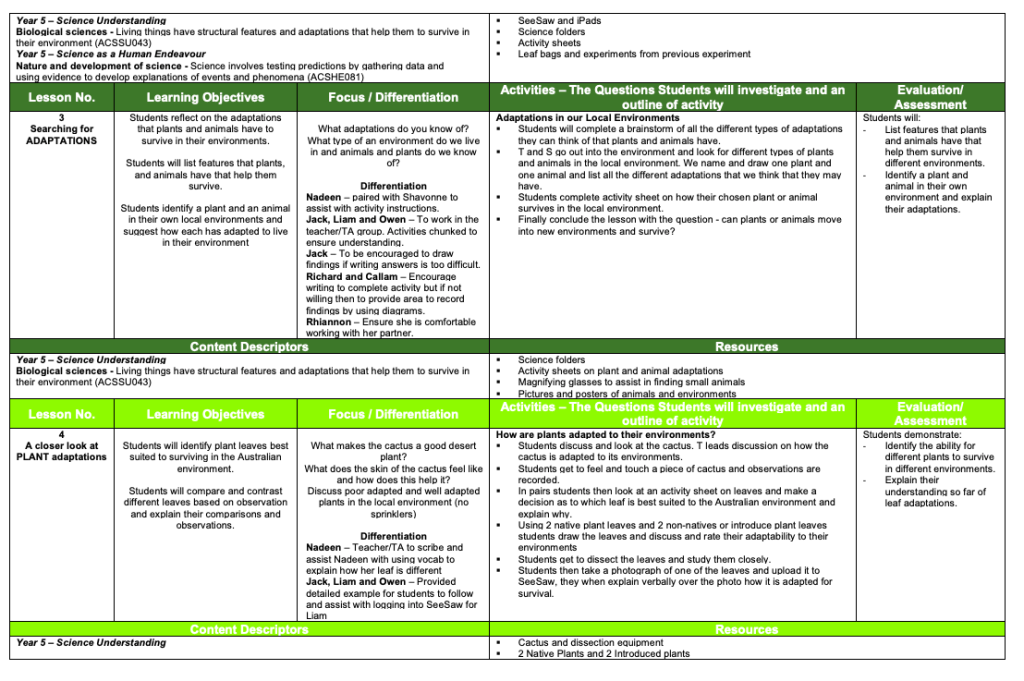
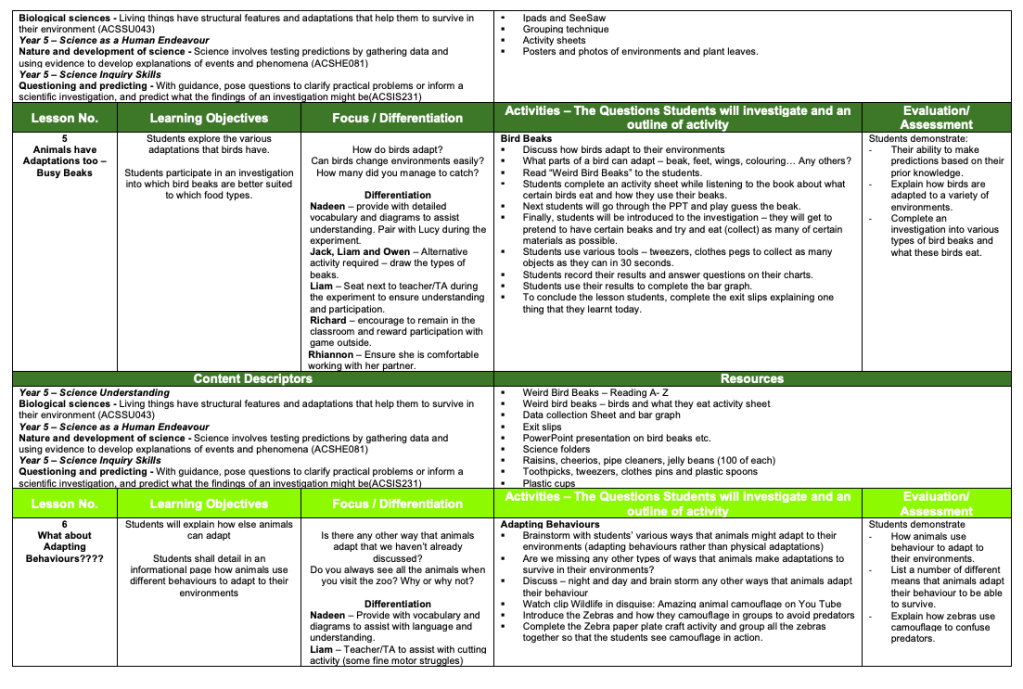
Anderson and Krathwohl (2001) Framework:
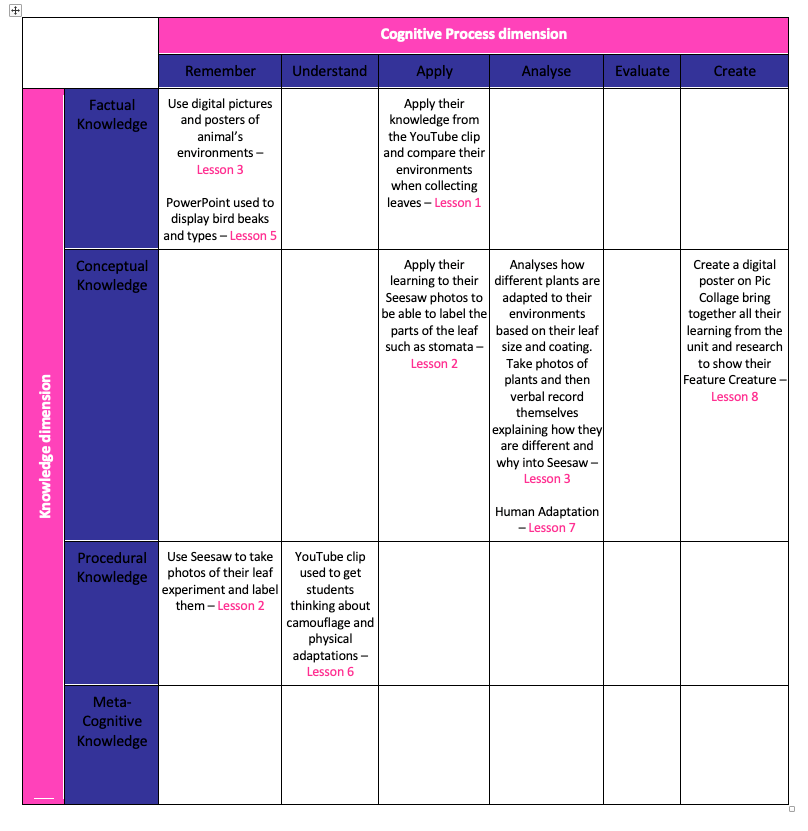
Looking back at how technology was used in this unit of work, I do not feel that it was always well aligned with knowledge progression or outcomes I was wanting the students to demonstrate and engage in. The areas of deeper and higher learning such as evaluating and problem solving were definitely not hit and these are areas that in future when selecting technologies to support my learning aims, I am more aware of.
It is important that teachers understand how the vast variety of technologies and tools support knowledge representation and sharing and this framework would be a great tool to apply to current units to determine the selection of technology to support cognition (Bower, 2017).
References
Bloom, B. S., Krathwohl, D. R. and Masia, B. B. (1964) Taxonomy of Educational Objectives. The classification of educational goals. Handbook 2: Affective Domain Boston David McKay Company, Inc
Bower, M. (2017). Design of technology-enhanced learning – Integrating research and practice. Bingley, UK: Emerald Publishing Group
Killen, R. (2005). Programming and Assessment for Quality Teaching and Learning. Thomson Social Science Press, Southbank Victoria.
Ritchhart, R., Church, M., & Morrison, K. (2011). Making Thinking Visible: How to Promote Engagement, Understanding, and Independence for All Learners. San Francisco, CA: Jossey-Bass.
 Bron's E-Portfolio EDCN 865